
Istara Almanac
Eating Awareness · Food & Mood · Mindful Portions · Habitual Snacking · Night-time Eating · Emotional Hunger · Eating Pace · Food Journalling · Eating Triggers · Distracted Eating · Eating Awareness · Food & Mood · Mindful Portions · Habitual Snacking
Editorial Wellness — London

Mapping the Slow Hunger

An independent almanac exploring the relationship between emotional states and eating behaviour — through observation, research-informed writing, and practical awareness.

Read Latest Article
Quiet kitchen table with a ceramic bowl, morning light casting soft shadows across a linen cloth and a half-eaten piece of fruit
74%
of adults report eating in response to stress rather than physical hunger
more calories consumed when eating while distracted versus attentive
20min
average delay before fullness signals reach conscious awareness
58%
of habitual snacking episodes occur outside conventional mealtimes
02 / About the Almanac

Observing the Space Between Hunger and Habit

Istara Almanac was founded on a single editorial observation: that the relationship between emotional states and eating behaviour is rarely explored with the depth it warrants outside academic literature. The common cultural framing reduces complex eating patterns to willpower narratives. Our writers take a different approach.

Each piece published here begins from observation — of daily rhythm, of eating environment, of the moments when distracted eating takes hold. We are interested in the texture of the experience rather than the direction of its correction. Food and mood connection is regarded as a subject worthy of careful, unhurried writing.

Articles are reviewed by at least one second editor before publication. Writers declare any relevant interests. Sources are cited where appropriate, and corrections are noted publicly. The editorial standards page describes our process in full.

Bright editorial workspace with a large wooden desk, open books, and a cup of tea beside a notebook, warm afternoon light through tall windows
Editorial workspace — London EC1, 2026
03 / Core Topics

Areas of Enquiry

01

Emotional Hunger vs Physical Hunger

Distinguishing between the two is the foundational skill of eating awareness. We examine the physical and contextual cues that separate biological need from emotional appetite.

02

Eating Triggers and Environmental Cues

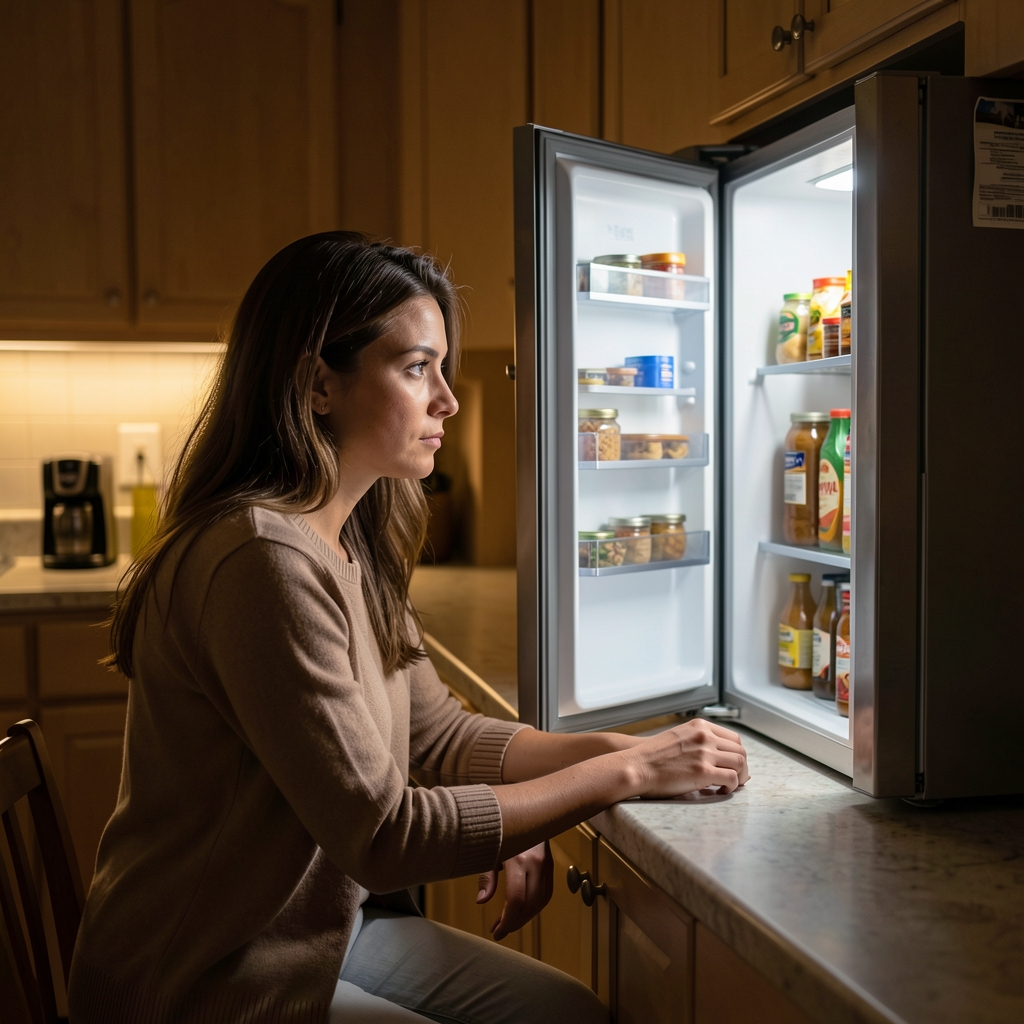
Eating environment — the presence of screens, the organisation of kitchen counters, the lighting in a room — shapes eating behaviour more consistently than is generally acknowledged.

03

Slowing Down at Mealtimes

Eating pace is one of the most researched and least practised aspects of mindful eating awareness. We look at what actually happens when people slow down, and what makes it difficult to sustain.

04

Recognising Fullness Cues

The body signals satiety well before the brain registers it consciously. Understanding the lag between physical signal and perceived fullness is central to mindful portion awareness.

05

Food Journalling Practices

A food journal used for awareness rather than restriction becomes a different document entirely. Writers in this almanac have kept detailed records and reflect on what was revealed.

06

Distracted Eating and Attention

Eating while watching, scrolling, or working has become a default setting for many people. The research on attention while eating consistently points in one direction, and we examine it carefully.

The eating episode rarely begins with appetite. It begins with an emotional state that has not found another outlet.

Editorial Position — Istara Almanac, Issue No. 01
04 / Common Questions

Frequently Asked

Emotional eating describes eating in response to an emotional state — boredom, stress, loneliness, or even celebration — rather than in response to physical hunger. The key distinction is that emotional hunger tends to arise quickly and is directed at specific foods, while physical hunger builds gradually and can be satisfied by most foods.
A food journal used for awareness rather than counting draws attention to the context of eating: what preceded the eating episode, what emotional state was present, where the eating occurred, and how full one felt afterwards. Over time this record surfaces patterns — particularly habitual snacking times or comfort food habits — that are invisible without documentation.
Fullness signals take approximately twenty minutes to travel from the digestive system to conscious awareness. Eating at pace means most people have substantially overeaten by the time they register satiety. Slowing down closes that gap — creating the conditions under which recognising fullness cues becomes possible.
Eating environment refers to the physical and social context of a meal: the room, the distractions present, whether others are eating, the size of the plate, the lighting, and the proximity of additional food. Research consistently shows that eating environment influences how much is eaten and how aware the person is of the experience.
Articles published on Istara Almanac are editorial in nature and reflect the writers' observations on everyday wellness practices. The content is not intended as professional advice, nor as guidance for the management of any specific condition. Readers with specific concerns about their daily routines are encouraged to speak with a qualified wellness professional.
Distracted eating — eating while engaged with a screen, phone, or work task — consistently increases the total quantity consumed and reduces reported satisfaction with the meal. Attention while eating appears to be a meaningful factor in both enjoyment and fullness awareness. This is a recurring subject in the almanac because the research is strong and the practical implications are clear.
05 / Editorial Standards

How This Almanac Selects and Reviews Its Content

Istara Almanac operates under a defined set of editorial principles. Every article passes through a second-editor review before publication. Sources from published research are referenced directly. Writers declare any relevant interests. Our methodology page describes each stage of the process.

View Methodology
02
Editors review every piece
100%
Sources cited or declared
0
Undisclosed commercial relationships
48h
Maximum correction window once notified